

Somewhere right now, a doctor is telling a patient that a disease they’d never heard of a month ago is going to change their life. It happens constantly. And yet most of us walk around with only a fuzzy idea of how health and disease actually work—what separates a body that’s thriving from one that’s quietly breaking down.
That gap in understanding costs people years of their lives. Not because they’re careless, but because nobody ever laid it out clearly for them.
This guide does that. We’ll cover what human health and disease really means, how diseases start and spread, the major categories you need to know, and—more importantly—what you can actually do about it. No jargon walls, no vague advice. Just a clear map of one of the most important topics you’ll ever read about: your own body.
What Does “Human Health and Disease” Actually Mean?
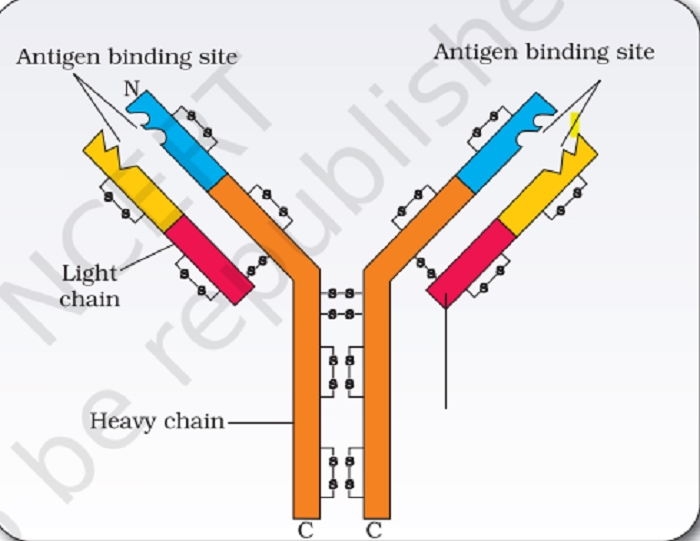
Health isn’t simply “not being sick.” The World Health Organization defines it as a state of complete physical, mental, and social well-being. That’s a much bigger idea than most people give it credit for.
Disease, on the other hand, is any condition that disrupts normal body function—structurally or functionally. It can be short-lived, like a cold, or lifelong, like type 1 diabetes. Some diseases announce themselves loudly with fever and pain. Others, like early-stage hypertension, stay silent for years while doing real damage.
Here’s the part competitors rarely explain well: health and disease aren’t two separate boxes. They exist on a spectrum. You can be “disease-free” on paper and still be nowhere near optimal health. Understanding that spectrum is the first step toward actually managing your own well-being instead of just reacting to it.
The Two Broad Categories of Disease
Nearly every disease humans experience falls into one of two buckets, plus a smaller third category worth knowing.
1. Communicable (Infectious) Diseases
These spread from person to person, animal to person, or through contaminated environments. Think influenza, tuberculosis, malaria, or COVID-19.
They’re caused by pathogens—bacteria, viruses, fungi, or parasites—that hijack your cells or overwhelm your immune defenses.
2. Non-Communicable Diseases (NCDs)
These don’t spread. They develop over time, usually from a mix of genetics, lifestyle, and environment. Heart disease and cancer are the classic examples of chronic, non-communicable conditions.
NCDs are the real story of modern global health. Ischaemic heart disease and stroke remain the world’s leading killers, with chronic obstructive pulmonary disease, lower respiratory infections, cancers, Alzheimer’s, diabetes, and kidney disease rounding out the top causes of death globally. That’s a massive shift from a century ago, when infections dominated the mortality charts.
3. Injuries and External Causes
Accidents, falls, violence, and self-harm form a third bucket. They’re not “diseases” in the classic sense, but they’re a leading cause of death and disability, especially among younger adults.
Quick Comparison Table
| Category | Examples | Spreads Between People? | Main Drivers |
|---|---|---|---|
| Communicable | Flu, TB, malaria, COVID-19 | Yes | Pathogens, sanitation, contact |
| Non-communicable | Heart disease, cancer, diabetes | No | Genetics, lifestyle, environment |
| External causes | Falls, accidents, injuries | No | Behavior, safety conditions |
Why the Global Disease Picture Has Changed So Much
If you compared a death certificate from 1950 to one from today, you’d notice something striking. Infections used to dominate. Now, chronic disease does the heavy lifting.
Noncommunicable diseases have grown more prominent, with Alzheimer’s disease and diabetes climbing into the top causes of death, while communicable diseases like HIV have dropped out of the top ten. That’s not a random shift. It reflects longer lifespans, better sanitation and vaccines, and—less flatteringly—diets and lifestyles that quietly wear the body down over decades.
As populations age worldwide, dementias have become a leading contributor to disability, while diabetes now demands a lifetime of monitoring and medication for hundreds of millions of people. This is the trade-off of medical progress: we’ve gotten remarkably good at keeping people alive past the age when infectious disease used to claim them, and now chronic disease has stepped into that space.
In the United States specifically, the pattern is even clearer. Heart disease remains the country’s leading cause of death, and stroke has climbed to the fourth spot, with cardiovascular disease overall killing more Americans than all cancers and accidental deaths combined. One stat from that data should worry younger readers in particular: stroke death rates among people aged 25 to 34 rose by 8.3% between 2013 and 2023, a trend that didn’t exist in the prior decade.
That’s not an “old person’s disease” anymore. That’s a wake-up call for everyone in their twenties and thirties who assumes chronic disease is a problem for later.
How Diseases Actually Develop: The Process Behind the Diagnosis
Most people think of disease as something that just “happens” to you. In reality, it usually follows a pattern.
- Exposure or predisposition. You inherit certain genes, or you’re exposed to a pathogen, toxin, or risk factor (like smoking or poor diet).
- Cellular disruption. Something at the microscopic level goes wrong—a mutation, an infection, chronic inflammation, or a metabolic imbalance.
- Subclinical stage. The disease exists but produces no noticeable symptoms. This can last years, especially with things like atherosclerosis or early cancer.
- Clinical stage. Symptoms appear. This is usually when people finally see a doctor.
- Outcome. Recovery, chronic management, disability, or death, depending on the disease and how early it was caught.
Here’s the piece most articles skip: stages 2 and 3 are where prevention actually works best. By the time you’re in stage 4, you’re often managing damage instead of preventing it. That’s exactly why routine screenings matter more than most people assume—they’re designed to catch you in the silent window before symptoms show up.
The Major Risk Factors Behind Modern Disease
Genetics load the gun, but lifestyle usually pulls the trigger. Researchers keep coming back to the same handful of modifiable risk factors:
- Poor diet — excess sugar, refined carbs, and trans fats drive inflammation and metabolic disease
- Physical inactivity — sedentary living weakens cardiovascular and metabolic function
- Tobacco and excessive alcohol use — major contributors to cancer, liver disease, and cardiovascular conditions
- Chronic stress — sustained cortisol elevation disrupts immune and metabolic regulation
- Air pollution and environmental toxins — linked to respiratory disease and certain cancers
- Poor sleep — associated with obesity, hypertension, and impaired immune function
- Social isolation — increasingly recognized as a measurable risk factor for both mental and physical decline
Notice something? Every single one of those is at least partially within your control. That’s not meant to sound preachy—genetics and access to healthcare matter enormously, and nobody chooses their circumstances. But it does mean prevention isn’t hopeless. It’s actionable.
Prevention: What Actually Moves the Needle
Prevention gets talked about in vague terms—”eat better, exercise more.” Let’s get specific.
Primary Prevention (Before Disease Starts)
- Vaccination against communicable diseases
- 150–300 minutes of moderate-intensity aerobic activity per week, the range recommended by the WHO
- A plant-forward diet that limits processed sugar and trans fats
- Avoiding tobacco entirely and moderating alcohol intake
Secondary Prevention (Early Detection)
- Blood pressure and cholesterol checks starting in your 20s
- Cancer screenings (colonoscopy, mammogram, Pap smear) on age-appropriate schedules
- Blood glucose testing, especially if diabetes runs in your family
- Mental health check-ins, not just physical ones
Tertiary Prevention (Managing Existing Disease)
- Medication adherence for chronic conditions
- Cardiac or pulmonary rehabilitation programs
- Ongoing monitoring to prevent complications like kidney damage from diabetes
A friend of mine ignored borderline blood pressure readings for three years because “nothing felt wrong.” By the time he got symptoms, he’d already had two silent mini-strokes. That’s the danger of subclinical disease—it doesn’t ask permission before it starts causing damage.
Communicable vs. Non-Communicable Disease: A Real-World Comparison
| Factor | Communicable Disease | Non-Communicable Disease |
|---|---|---|
| Onset | Often sudden | Usually gradual, over years |
| Cause | Pathogen (virus, bacteria, etc.) | Genetics + lifestyle + environment |
| Contagious | Yes | No |
| Treatment | Antibiotics, antivirals, vaccines | Lifestyle change, medication, surgery |
| Prevention | Hygiene, vaccination, sanitation | Diet, exercise, screening, stress management |
| Global trend | Declining (with exceptions) | Rising, especially in aging populations |
Mental Health: The Piece Most “Disease” Articles Leave Out
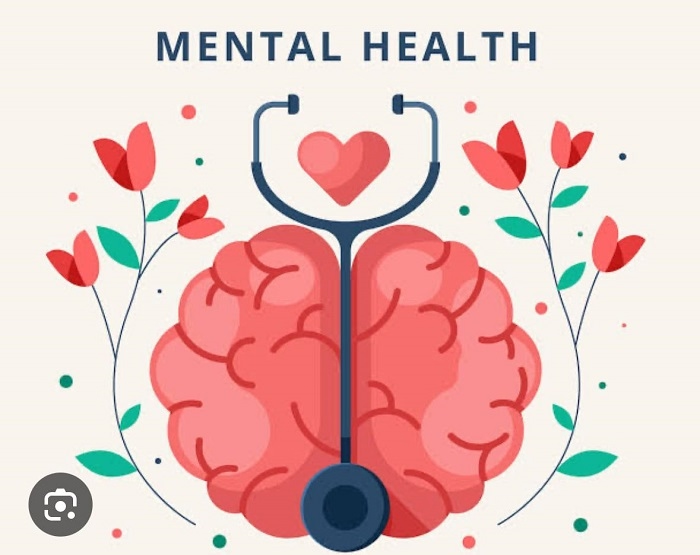
Here’s where a lot of health content falls short—it treats mental health as a side note. It isn’t. Depression, anxiety, and chronic stress don’t just affect mood; they raise the risk of cardiovascular disease, weaken immune response, and can shorten lifespan just as measurably as smoking.
The body doesn’t separate “physical” and “mental” the way we do in conversation. Chronic stress elevates cortisol, which raises blood pressure, disrupts sleep, and promotes fat storage around organs—a cascade that eventually shows up as a physical diagnosis. If you’re managing a chronic illness, addressing the mental toll of that diagnosis isn’t optional self-care. It’s part of the treatment.
Emerging Trends Shaping Health and Disease Right Now
A few shifts are worth knowing about, because they’ll shape how disease is understood and treated going forward:
- Personalized medicine — treatment increasingly tailored to individual genetics rather than one-size-fits-all protocols
- The gut-microbiome connection — growing evidence links gut bacteria diversity to immune function, mental health, and metabolic disease
- Earlier chronic disease onset — conditions once considered “diseases of aging” are appearing in younger populations
- Telehealth-driven early screening — remote monitoring tools are catching subclinical issues earlier than ever before
- Antibiotic resistance — a growing concern that’s pushing infectious disease management back toward prevention-first strategies
Frequently Asked Questions
What is the difference between health and disease? Health is a state of physical, mental, and social well-being, not merely the absence of illness. Disease is any disruption to normal body structure or function, whether caused by infection, genetics, or lifestyle factors.
What are the four main types of disease? Most classifications group diseases into infectious, deficiency, hereditary (genetic), and physiological (functional or degenerative) diseases. Some frameworks add a fifth category for injuries.
Can non-communicable diseases be reversed? Many early-stage non-communicable diseases, such as prediabetes or mild hypertension, can be significantly improved or reversed through diet, exercise, and lifestyle changes. Advanced-stage chronic diseases are usually managed rather than reversed.
What’s the single most effective disease-prevention habit? There’s no single magic habit, but consistent physical activity has one of the broadest protective effects, touching cardiovascular, metabolic, mental, and immune health simultaneously.
Why are chronic diseases increasing in younger people? Sedentary lifestyles, processed food consumption, chronic stress, and poor sleep patterns are appearing earlier in life, accelerating the onset of conditions once associated mainly with older age.
How often should I get health screenings? This depends on age, family history, and risk factors, but general guidance includes annual blood pressure checks from your 20s onward, cholesterol testing every 4–6 years starting at 20, and cancer screenings based on age-specific guidelines from your doctor.